

Simplify Workflows with ERP Automation | NOI Technologies
Simplify Workflows with ERP Automation | NOI Technologies https://www.noitechnologies.com/wp-content/uploads/ERP-Automation-solutions.avif 2560 1441 Visvendra Singh https://secure.gravatar.com/avatar/824969161f6ef5f9816028e493f8b0c199f12b9bdf61433328e6dada610d186b?s=96&r=gERP plays a major role in aligning your business processes and improving overall business growth. The ERP software lets your organization integrate prime business functions such as finance, human resources, CRM, and others, thereby contributing to enhanced productivity, performance, and long-term business growth.
However, when all these tasks are performed traditionally or manually, they can be time-consuming and challenging. This is where ERP automation becomes indispensable, as it helps simplify business process management, reduce manual intervention and human errors, and enhance operational efficiency.
What is ERP Automation and Why is it Important?
ERP automation means leveraging technology and innovation to automate diverse key business processes, individual tasks, and workflows within an ERP system.
By integrating automation within an ERP ecosystem, businesses can achieve numerous benefits like streamlining business processes, enhancing accuracy, and reducing manual efforts required for handling different functions, including automating and aligning repetitive workflows such as data entry, payroll handling, invoice processing, generating reports, and other tasks.
Automation does not just mean improving productivity, but it also means facilitating consistency and compliance across the organization by minimizing human mistakes and organizing processes.
How Automation Simplifies Business Workflows
Manual workflows can be slow and are more prone to errors. By simplifying these workflows into automated tasks via an ERP system, companies can improve efficiency, performance, cut costs, save their valuable time and resources, increase accuracy, and achieve various other benefits.
Moreover, ERP automation is known for consistency and efficiency, letting employees focus on higher-value, strategic activities.
Ready to Explore ERP Automation for Your Business?
Our team at NOI Technologies can help you identify the right ERP automation solution for your unique workflows.
Key Advantages of ERP Automation Software
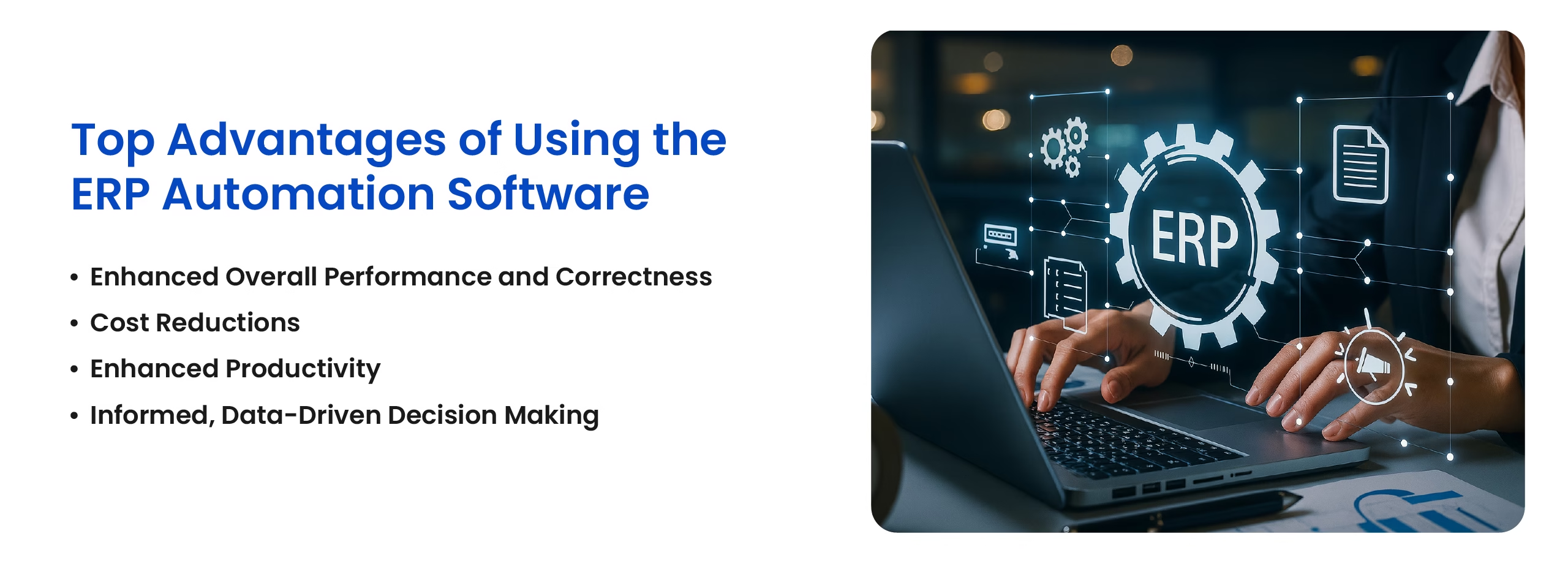
If you’re a modern business that wants to gain a strategic advantage, then investing in ERP automation is a great way to get access to a wide range of benefits:
- Enhanced Accuracy and Performance: ERP automation solutions help simplify and automate complicated business workflows and manual processes. This supports a drastic improvement in efficiency, accuracy, and error reduction. By automating critical tasks like data entry, report generation, invoicing, approval processes, and others, companies can achieve operational excellence and ensure consistent, correct data across the ERP platform and connected systems.
- Cost Optimization and Risk Reduction: Leveraging automation in ERP helps enterprises cut costs by optimizing resources and directing them toward more critical business processes. Additionally, it reduces the risks of financial losses caused by errors, compliance violations, or delays in project delivery.
- Boosting Employee Productivity: With manual workflows eliminated, employees spend less time on administrative tasks and more time on projects requiring creativity, problem-solving, and decision-making abilities, ultimately boosting productivity.
- Smarter, Data-Driven Decision Making: ERP automation systems simplify data aggregation, providing clear, actionable insights. Automated data collection and analysis help track real-time performance, identify improvement areas, and develop effective strategies to increase business profits.
Why Your Business Needs the Right ERP Automation Solution
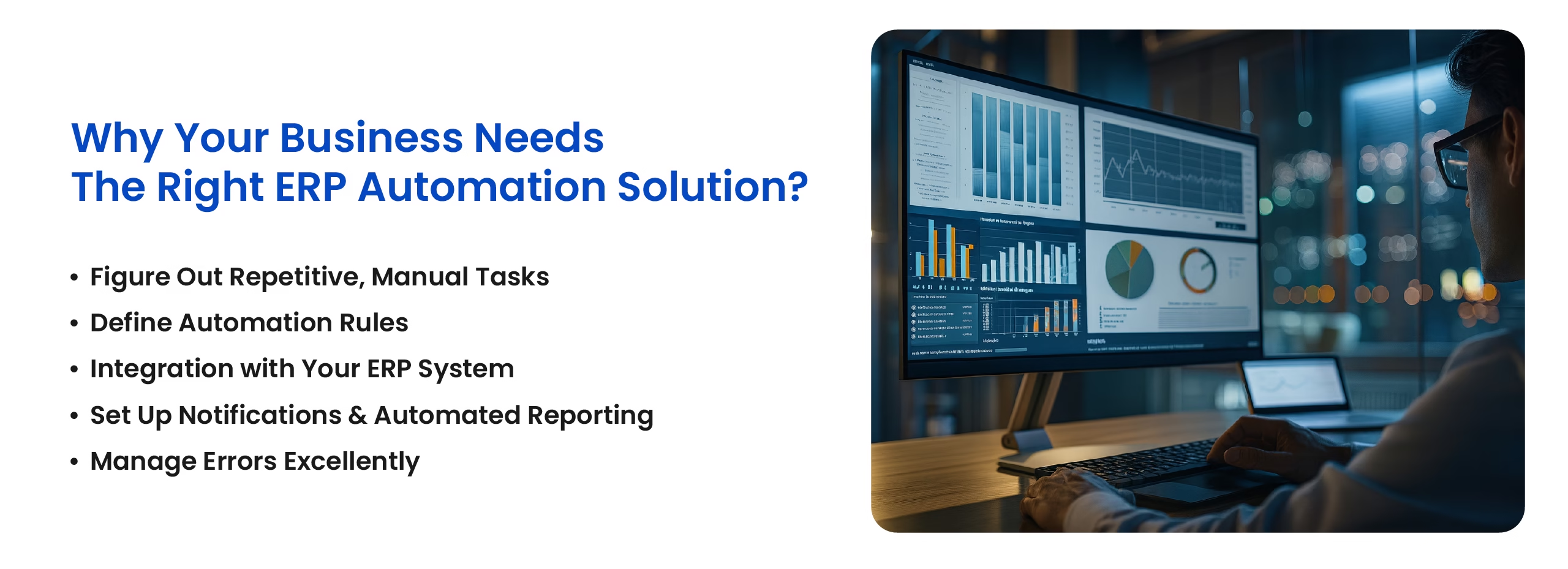
ERP automation empowers organizations by simplifying workflows, eradicating repetitive tasks, and improving overall productivity and performance. To unlock the full potential of ERP automation software, careful and successful implementation is essential. Here is a step-by-step procedure to help you get started:
- Identify Repetitive and Manual Tasks: The first step in your ERP automation journey is to pinpoint repetitive tasks. These workflows are usually manual, error-prone, and time-consuming. Common tasks that can be automated include:
- Data Entry: Automating data entry reduces mistakes, improves accuracy, and speeds up the process by integrating data from spreadsheets and databases.
- Report Creation: Automation tools generate reports using predefined templates, scheduling, and auto-distribution to stakeholders—ensuring decision-makers always have up-to-date insights.
- Employee Onboarding: ERP automation manages tasks such as verifying employee information, creating accounts, and assigning access permissions for a smooth onboarding process.
- Purchase Order Processing: Automation streamlines order receipt, validation, and data entry, ensuring accurate and faster processing of purchase orders.
- Define Automation Rules Effectively: Once workflows are identified, define automation rules that act as triggers and actions for each process:
- Understand the needs and objectives of the tasks.
- Break down each process into steps.
- Identify decision points or triggers.
- Describe actions such as data validation, report generation, or notifications.
- Account for exceptions or variations in workflows.
A well-designed set of rules ensures automation aligns with your business objectives.
- Ensure Seamless ERP Integration: Choose solutions that connect easily with your existing ERP systems to ensure data precision, consistency, and no duplication. Key considerations:
- Look for prebuilt connectors or APIs for smooth integration.
- Follow strong security measures to protect sensitive data.
- Choose a scalable solution that adapts as your business grows.
- Real-Time Notifications & Automated Reporting: Real-time visibility and insights are key benefits of ERP automation. Businesses can:
- Notify stakeholders about important tasks or issues via email, SMS, or apps.
- Generate automated, accurate, and up-to-date reports covering sales, finance, and operations.
- Customize reports for executives, managers, and departments.
This improves communication, transparency, and accountability.
- Managing Errors Efficiently: Even automated processes can face errors, but ERP automation helps detect and resolve them quickly:
- Identify missing data, incorrect entries, or violations of rules.
- Send proactive alerts to teams for quick resolution.
- Suggest corrective measures and step-by-step guides to maintain business continuity.
Eventually, this suggestion will help businesses minimize the dependence on manual intervention, reduce human errors, and speed up the error resolution process while maintaining operational continuity.
Final Thoughts: Focus on Growth, Not Manual Work
ERP automation is not just about speeding up your business processes, but it is more about giving your team immense time so they can focus on more valuable tasks without disrupting business operations.
Your organization can build a seamless and high-performing ERP framework that scales with your business by following certain steps, like figuring out repetitive tasks, defining clear automation rules, integrating ERP, enabling up-to-date reporting, and setting up an error handling plan and other steps.
Choose NOI Technologies for ERP Automation Success
At NOI Technologies, our goal is to provide intelligent, ERP automation solutions that seamlessly connect and automate every phase of the business journey. We believe that smarter ERP software boosts business revenues. With our industry-focused expertise, we help organizations successfully handle projects while increasing productivity, performance, and profitability.
Take the Next Step Toward Smarter Workflows
Don’t let manual processes slow your business down. Schedule a call with our ERP experts today and start your journey toward automation-driven growth.
Published on Aug 19, 2025